
OVERVIEW
Positron Emission Tomography (PET)/Computed Tomography (CT) technology is an advanced nuclear imaging exam that allows physicians to view and measure not only the size, shape, and location of an organ or internal structure but also its function, in one scan.
Computed Tomography (CT) uses x-ray technology and computers to view the anatomy of tissues with exceptional clarity and detail. Positron Emission Tomography (PET) captures images of the biological function of tissues by detecting the distribution of a radioactive substance that is injected into the patient prior to the exam.
PET/CT scans are a valuable tool in the detection and diagnosis of cancer, blocked arteries in the heart and neurological conditions such as Alzheimer’s and dementia.
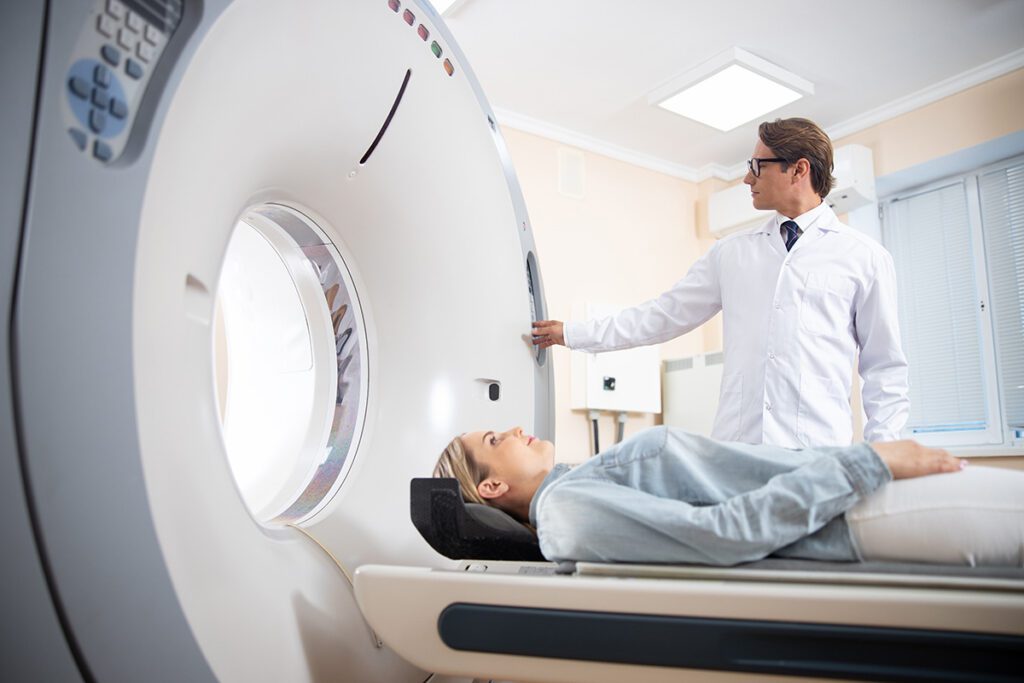
What to Expect during A PET Exam
Patient Testimonials
Craig, Chotley
“Everyone that we have worked with… and finally my procedure were above and beyond helpful… — PET SCAN patient”
Frequently Asked Questions
A PET/CT scan combines two imaging technologies in one exam. The CT scan provides detailed images of your body’s anatomy, while the PET scan shows how your tissues and organs are functioning. Together, they give physicians a complete picture of both structure and function.
PET/CT scans are valuable for detecting and diagnosing cancer, identifying blocked arteries in the heart, and evaluating neurological conditions such as Alzheimer’s disease and dementia.
The entire exam typically takes about two hours. This includes an injection of radioactive tracer, a 60-minute rest period while your body absorbs the tracer, and the actual scanning time.
Yes, the radioactive sugar solution used in PET/CT scans is safe and causes no side effects. The amount of radiation is carefully controlled and minimal.
Typically, PET/CT scans begin with an injection of a radioactive sugar solution. Following the injection, the patient rests in a private room for approximately 60 minutes.
As your body metabolizes the sugar, the positrons that are attached to the sugar can be seen by the PET/CT scanner. Areas with higher radioactivity will show up as “hot spots” on a PET/CT image, which can be an indication of rapidly growing tumors as cancerous cells generally consume more sugar than normal tissue.
Generally, it is safe to assume up to two hours to complete the entire exam.
The PET exam itself causes no side effects and patients are able to drive themselves home if they did not require/request any sedation. If patients do opt for a mild sedative to relieve anxiety etc., they are required to make transportation arrangements for a ride after the exam.