
OVERVIEW
Ultrasound, also known as sonography, is an imaging technique that sends high-frequency sound waves through the body. These waves bounce off internal structures. Special equipment records these echoes to create pictures of inside the body. The technology works much like the sonar used in fish finders and ships.
Ultrasound can produce real-time images of organs in motion, without the use of radiation. It is a highly versatile tool used by physicians to diagnose and treat many medical conditions, and to investigate pain, swelling, infection and other problems with internal organs, such as the gastrointestinal (GI) organs, kidneys and reproductive organs.
A special type of ultrasound technique, called Doppler ultrasound, is used to study blood flow through vessels, including major arteries and veins in the abdomen, neck, legs and arms. Doppler ultrasounds help physicians evaluate blockages to blood flow, narrowing of vessels, and tumors or congenital malformations. Ultrasound is also used to guide biopsies and other minimally invasive medical procedures.

What to Expect during AN Ultrasound Exam
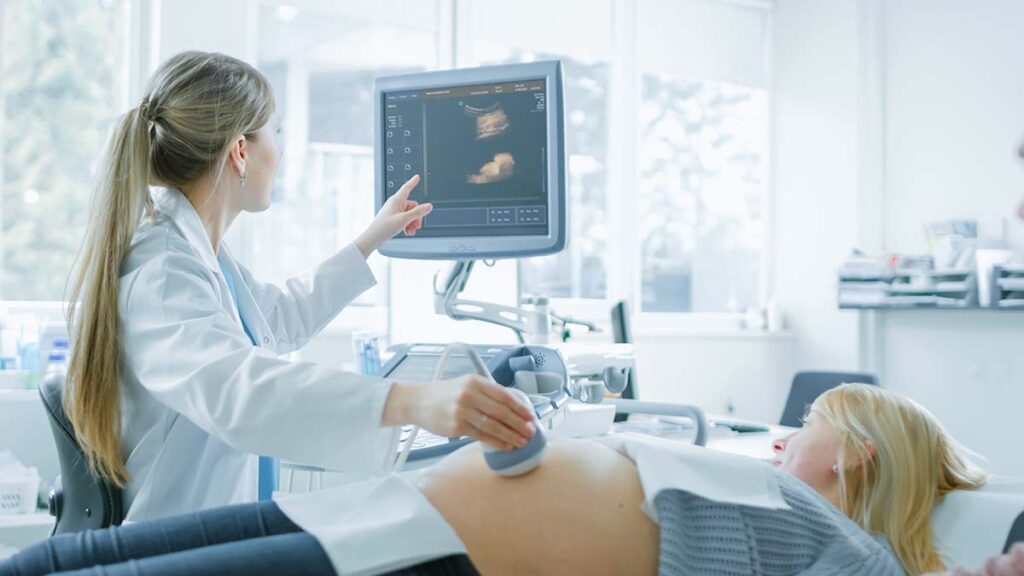
ULTRASOUND EXAM
ROOM VISITOR POLICY
The following policies have been adopted to ensure the highest quality ultrasound exams possible.
- We cannot allow unsupervised children under the age of 12 in the exam room or in the lobby. We do, however, provide flexible weekend and evening appointments.
- Only the patient will be allowed into the exam room during ultrasound exams, with the exception of OB, minor patients, care givers or interpreters.
- During Obstetrical ultrasounds, a maximum of two adults will be allowed in the room during the exam.
- Cameras and camcorders are extremely distracting and are not allowed in the room during the exam.
- Patients who are pregnant will be given some complimentary photos of their baby. Entertainment DVD’s are no longer available. Official copies of your exam can be requested for small fee and will be available 48 hours after the completion of your test.
- Cell phone use is not allowed in the exam rooms.
- Meta glasses are not allowed in the exam rooms.
Patient Testimonials
Miranda, Dr.Kirsch
“Perfect experience!… It was especially gratifying to have Dr. Kirsch physically at the bedside helping with the ultrasound…”
Rebecca
“The receptionist was very helpful and even helped me out with sending ultrasound results from a few years back to my new doctor.”
Hannah
“The tech ‘Hannah’… I was uncomfortable with having the internal type of ultrasound and within a minute I was no longer worried.”
Frequently Asked Questions
Ultrasound, also called sonography, is an imaging technique that uses high-frequency sound waves to create pictures of the inside of your body. It works similarly to sonar technology and can produce real-time images without using radiation.
Most ultrasound exams are completed within 30 minutes to an hour. In some cases, you may be asked to wait while the images are reviewed before leaving.
Yes, ultrasound is very safe. It doesn’t use radiation, making it an excellent choice for many patients, including pregnant women monitoring their babies.
Doppler ultrasound is a special technique that evaluates blood flow through vessels in areas like the abdomen, neck, legs, and arms. It helps physicians identify blockages, narrowed vessels, tumors, or congenital malformations.
You’ll lie on an exam table while a clear gel is applied to the area being examined. An ultrasound technologist will press a small handheld device called a transducer against your skin and move it back and forth to capture images.
For most ultrasound exams, only the patient is allowed in the exam room. Exceptions include OB ultrasounds (maximum two adults allowed), appointments for minor patients, or when caregivers or interpreters are needed. Unsupervised children under 12 are not permitted in exam rooms or the lobby.