
OVERVIEW
Computerized tomography (CT) provides detailed imaging for diagnosing cancer, cardiovascular disease, infectious diseases, trauma, and musculoskeletal disorders. CT scans capture exceptionally clear images of internal organs, bones, soft tissue, and blood vessels that conventional X-rays often miss.
The technology takes multiple pictures from different angles, which a computer combines into cross-sectional “slices.” These create 2D and 3D images that physicians use to evaluate the location, shape, size, density, and texture of internal structures.
Inland Imaging’s advanced Toshiba Prime CT scanners deliver high-resolution images while reducing radiation exposure by up to two-thirds. The industry-leading software automatically adjusts the radiation dose to each patient’s specific needs and minimizes scanner noise.
What to Expect during A CT Exam
Patient Testimonials
Josh
“That was amazingly fast and easy… I never would’ve stopped getting X-rays/CT scans, the tech was fast… “
Riley
“My experience was good. Riley was kind and understanding and very professional. — CT patient”
Olivia
“I liked that Olivia took a real interest into my health currently and cared to be sure to get the details for my CT scan.”
Jake
“Our tech Jake for the CT was really great at helping a scared little guy feel more at ease.”
Angela, Rebecca
“Receptionist Rebecca was awesome… and my CT technician Angela was a pure pleasure to work with!”
Frequently Asked Questions
A CT (computerized tomography) scan is an advanced imaging test that takes multiple X-ray pictures from different angles around your body. A computer combines these images to create detailed cross-sectional views of your internal organs, bones, soft tissue, and blood vessels.
CT scans help diagnose and monitor many medical conditions, including cancer, cardiovascular disease, infectious diseases, trauma injuries, and musculoskeletal disorders. They’re particularly useful for viewing areas that are difficult to see with conventional X-rays.
Most CT scans take between 10 to 30 minutes, depending on the area being examined. The actual scanning time is often just a few minutes, with additional time needed for preparation and positioning.
Yes, CT scans are safe. Inland Imaging uses advanced Toshiba Prime CT scanners that reduce radiation exposure by up to two-thirds compared to older technology. Our software automatically adjusts the radiation dose to your specific needs while maintaining high image quality.
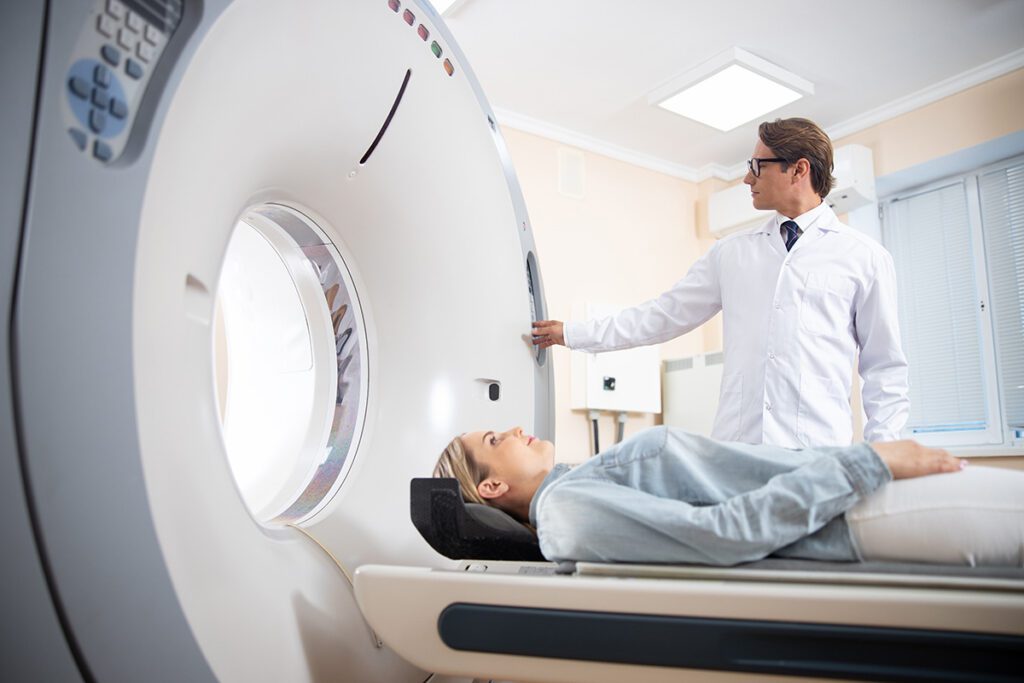
You’ll lie on a table that slides into the CT scanner, which is shaped like a large donut. The scanner will rotate around you, taking pictures from different angles. You’ll need to remain still and may be asked to hold your breath briefly. The procedure is painless and non-invasive.
Preparation depends on the type of CT scan you’re having. You may be asked to avoid eating or drinking for a few hours before your exam, especially if contrast dye will be used. Wear comfortable, loose-fitting clothing and avoid wearing jewelry or metal objects.