
Pay Your Bill

  1. Home
  2. Services
  3. PET/CT

PET/CT

OVERVIEW

Positron Emission Tomography (PET)/Computed Tomography (CT) technology is an advanced nuclear imaging exam that allows physicians to view and measure not only the size, shape, and location of an organ or internal structure but also its function, in one scan.

Computed Tomography (CT) uses x-ray technology and computers to view the anatomy of tissues with exceptional clarity and detail. Positron Emission Tomography (PET) captures images of the biological function of tissues by detecting the distribution of a radioactive substance that is injected into the patient prior to the exam.

PET/CT scans are a valuable tool in the detection and diagnosis of cancer, blocked arteries in the heart and neurological conditions such as Alzheimer’s and dementia.
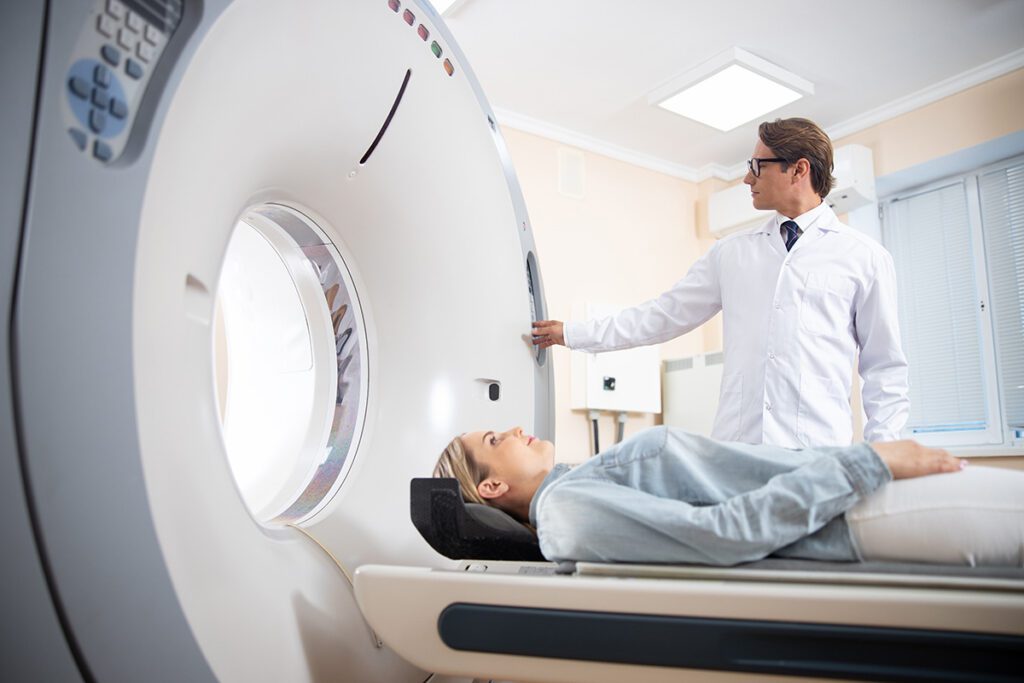
Young lady getting and MRI scan.

What to Expect during A PET Exam

Patient Testimonials

Lorem ipsum dolor sit amet, consectetur adipiscing elit.

“Lorem ipsum dolor sit amet, consectetur adipiscing elit, sed do eiusmod tempor incididunt ut labore et dolore magna aliqua. Ut enim ad minim veniam, quis nostrud exercitation ullamco laboris nisi ut aliquip ex ea commodo consequat.”

Lorem ipsum dolor sit amet, consectetur adipiscing elit.

“Lorem ipsum dolor sit amet, consectetur adipiscing elit, sed do eiusmod tempor incididunt ut labore et dolore magna aliqua. Ut enim ad minim veniam, quis nostrud exercitation ullamco laboris nisi ut aliquip ex ea commodo consequat.”

Lorem ipsum dolor sit amet, consectetur adipiscing elit.

“Lorem ipsum dolor sit amet, consectetur adipiscing elit, sed do eiusmod tempor incididunt ut labore et dolore magna aliqua. Ut enim ad minim veniam, quis nostrud exercitation ullamco laboris nisi ut aliquip ex ea commodo consequat.”

Frequently Asked Questions

A PET/CT scan combines two imaging technologies in one exam. The CT scan provides detailed images of your body’s anatomy, while the PET scan shows how your tissues and organs are functioning. Together, they give physicians a complete picture of both structure and function.

PET/CT scans are valuable for detecting and diagnosing cancer, identifying blocked arteries in the heart, and evaluating neurological conditions such as Alzheimer’s disease and dementia.

The entire exam typically takes about two hours. This includes an injection of radioactive tracer, a 60-minute rest period while your body absorbs the tracer, and the actual scanning time.

Yes, the radioactive sugar solution used in PET/CT scans is safe and causes no side effects. The amount of radiation is carefully controlled and minimal.

Typically, PET/CT scans begin with an injection of a radioactive sugar solution. Following the injection, the patient rests in a private room for approximately 60 minutes.

As your body metabolizes the sugar, the positrons that are attached to the sugar can be seen by the PET/CT scanner. Areas with higher radioactivity will show up as “hot spots” on a PET/CT image, which can be an indication of rapidly growing tumors as cancerous cells generally consume more sugar than normal tissue.

Generally, it is safe to assume up to two hours to complete the entire exam.

The PET exam itself causes no side effects and patients are able to drive themselves home if they did not require/request any sedation. If patients do opt for a mild sedative to relieve anxiety etc., they are required to make transportation arrangements for a ride after the exam.

Scroll to Top

New digital PET/CT Technology provides patients and health care providers greater imaging accuracy at minimal radiation dose

[Spokane, WA] SEPTEMBER 15, 2020. Recently, Inland Imaging acquired and installed a new, next-generation digital PET/CT scanner — the Biograph Vision, designed and manufactured by Siemens Healthineers. The new scanner — the first Siemens digital PET/CT to be installed on the West Coast — leverages advanced digital technology to help Inland Imaging’s sub-specialized radiologists detect small, disease related lesions earlier, better quantify them, and more fully understand disease progression and response to treatment.

“Inland Imaging’s new digital PET/CT scanner represents the next-generation of technology. It is the most advanced and most sensitive PET/CT technology available in our region today, designed to deliver an exciting new level of precision molecular imaging, and improved patient experience,” said Dr. Irene Cruite, the Nuclear Medicine Section Head at Inland Imaging. “This new scanner takes a technological leap forward in quality and efficiency. It has improved our ability to deliver the answers patients and their health care providers need to provide accurate and timely diagnosis, stage disease, determine the best course of treatment, and monitor disease progression and response to treatment. The digital capability enhances our ability to detect and characterize small lesions, and it increases conspicuity of subtle areas of disease that would otherwise not be apparent. It is also synergistic with new radionuclide therapies, new PET/CT imaging radiotracers, and new applications of current radiotracers. In addition, the new scanner is designed with a series of features that allow for metal artifact reduction, lower patient radiation exposure and shorter scan times for patient comfort without impacting image quality. Its wide-bore design also helps improve patient experience and comfort. This new technology has enhanced our ability to deliver value-oriented care and potentially improve patient outcomes by getting the right treatment to the right patient at the right time.”

THE DIGITAL DIFFERENCE

“Digital PET/CT clearly surpasses analog scanners in terms of image quality, detail, and sharpness,” said David Mariner, manager of Inland Imaging’s Nuclear Medicine team. “With better spatial resolution and increased sensitivity, this technology delivers much higher image quality using less radiation and shorter scan times when compared to older analog scanners.

More detailed image quality translates into more accurate diagnoses, allowing patients and their providers to take advantage of the most effective early treatment options available. We are scanning using 40-70% less radioactive isotope than would be used with an older analog scanner, which significantly reduces patient radiation exposure. In some cases we have successfully scanned patients at half the radiation dose that similar groups around the country consider to be their low dose protocol on newer scanners. We have also reduced scan time by 20-40%, which minimizes patient motion during image acquisition and improves patient comfort. The new scanner also allows us harness new PET/CT applications and new radionuclide therapies, thereby providing leading-edge services to our patients and their health care providers.”

“We are excited to be the first to bring this new digital PET/CT technology to the region,” said Bob White, chief operating officer at Inland Imaging. “Its high resolution and enhanced imaging quality allow our highly trained radiologists to identify small lesions much earlier. By incorporating the capabilities of this advanced digital PET/CT scanner into our practice, we can improve patient safety and comfort, identify disease sooner, improve outcomes, reduce costs, and help patients take advantage of the most effective therapies.”

Home

Edit Content

Types of Imaging

About MRI

Alzheimer’s Screening

Body MRI

Breast MRI

Cardiac MRI

Head & Spine MRI

MRI DefecographyMSK

MRI

Prostate MRI

About Computed Tomography (CT)

Coronary Artery Screening CT Exam

Coronary CT Angiography
CT Lung Screening

Virtual Colonoscopy

About Nuclear Medicine

Bone Imaging

Brain Scan

Cisternogram

Gallium Scan

Gastric Emptying

Gastrointestinal

Hepatobiliary Scan

I-123 MIBG

Liver and Spleen

Lung Scan

MUGA Scan: Resting

Nuclear Oncology

Renal Scan

Thyroid Exams

White Blood Cell Test

About X-Ray/Fluoroscopy

Hysterosalpingogram

Lumbar Puncture

Myelogram

Upper Gastrointestinal

Voiding Cysto

Urethrogram

Ultrasound

Bone Densitometry

Specialty & Preventative Care

About Women’s Imaging

Breast Cancer by the Numbers

Breast Cancer Risk Assessment

Breast Imaging

My Breast Health

My Mammogram Experience

Supplemental Breast Exams

About Preventative

Imaging

Alzheimer's Screening

Coronary Artery Screening

CT Exam

CT Lung Screening

Virtual Colonoscopy

Varicose Veins / Venous Disease

Body Composition

Theranostics

Additional Services

Interventional Radiology

B Reading Services

Rural Radiology

Edit Content
Click on the Edit Content button to edit/add the content.
Edit Content
Click on the Edit Content button to edit/add the content.

Patient Portal

Pay Your Bill